
Paris In Ruins: How A Brutal Conflict Informed the Birth of Impressionism
Conrad A. Elvehjem Building, Room L160
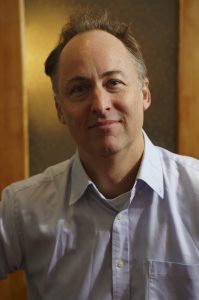
Sebastian Smee. Photograph courtesy of Amber Davis Tourlentes.
Sebastian Smee is an art critic for The Washington Post and the author of Paris in Ruins: Love, War and the Birth of Impressionism. He won the Pulitzer Prize for Criticism in 2011 while at The Boston Globe and taught non-fiction writing at Wellesley College from 2010–2022. He has written for newspapers and magazines in the U.K., Australia and the U.S., among them The Daily Telegraph, The Guardian, The Financial Times, The New York Times, The Spectator, The Australian, The Monthly, and The Sydney Morning Herald. He was awarded the Rabkin Prize for art journalism in 2018 and was a MacDowell Fellow in 2021. He wrote The Art of Rivalry: Four Friendships, Betrayals, and Breakthroughs in Modern Art (2016) and Net Loss: The Inner Life in the Digital Age (2018). He has written or contributed essays to seven books on Lucian Freud and one on Mark Bradford. His books have been shortlisted for the General History Prize NSW History Awards (2025), the Prime Minister’s Literary Awards, non-fiction (2017), and the Mark and Evette Moran Nib Literary Award, non-fiction (2017) and was a finalist in the Walkley Book Award (2016).
This event is sponsored by the Institute for Research in the Humanities’ Germaine Brée Lecture Fund.