
Swimming with the Current: A Writing Practice
IRH RM 211
Jill Stukenberg
Universities of Wisconsin Fellow (2026–2027)
Professor, Department of English, UW–Stevens Point
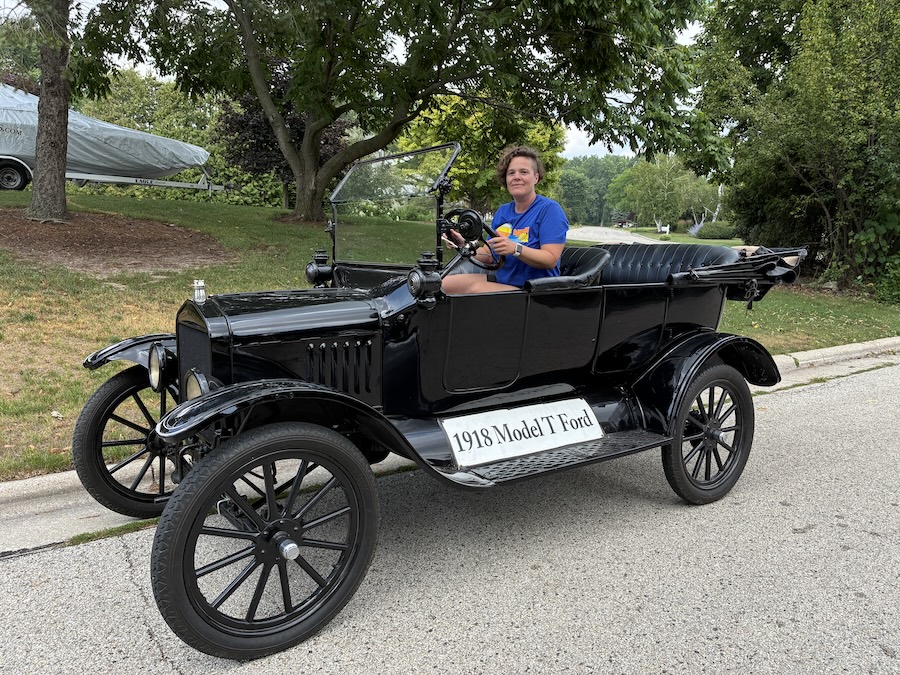
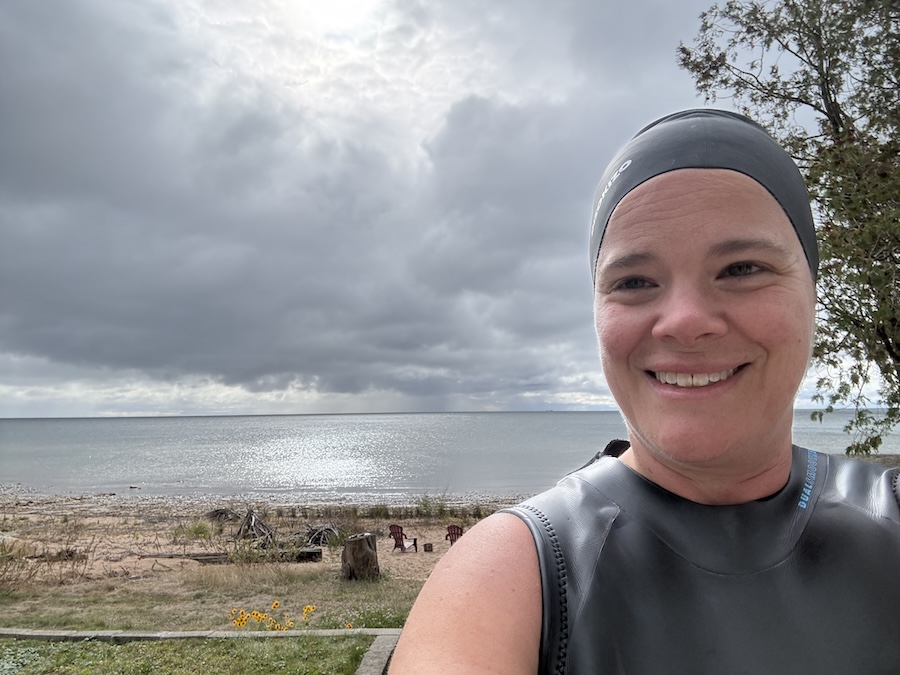
During my time at the IRH I’ve been researching and drafting a novel based on a time traveling swimmer. Come to this informal lunch hour presentation to learn about embodied and community-sourced research and site-specific eco-fiction. Or, how I’ve been riding around in Model Ts, identifying macroinvertebrates with high school students, asking strangers about the color of the sky when they were young, and experimenting with which swim strokes get me most tangled in the new weeds sprouting in the bay where I grew up.
Are some of these activities connected to how the writer responds to generative AI? They are for me about how I contend with the sometimes seemingly disparate goals of making art and being responsible in my communities and in my home. Do these methods of research amount to a kind of public humanities? Or do they make for another kind of eco-fiction, one in which I am co-creating with my environment and with my community?
Jill Stukenberg is a Professor of English at UW–Stevens Point. She co-edits Midwest Review and her debut novel News of the Air won the Big Moose prize and was published by Black Lawrence Press in 2022. She was a Wisconsin Teaching Fellow, and previously taught for the UW Colleges. She has researched and published in the area of creative writing pedagogy. Her short stories have appeared in Marrow, Midwestern Gothic, and The Collagist, among other places, and recently her essay “Notes from the Bayside” was included in On an Inland Sea: Writing the Great Lakes, edited by Michael Welch. She has taught and held residencies at Write On, Door County, near where she grew up. Relevant to her current creative work, she is an open-water swimmer.