
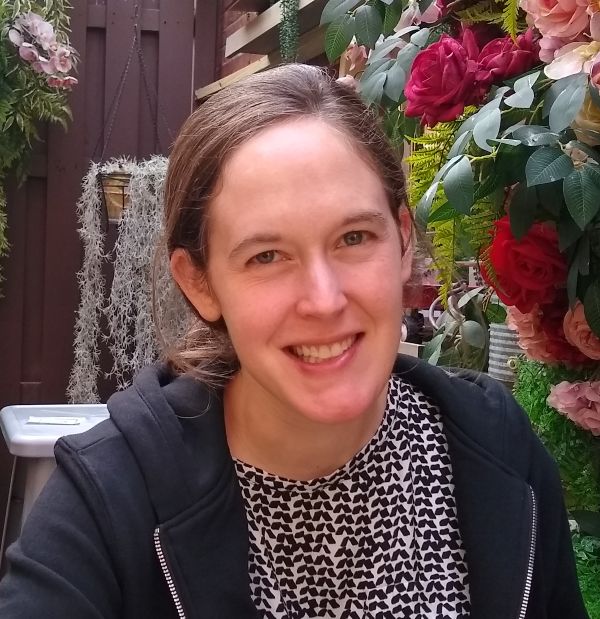
Emma Kuby
UW-Madison Open-topic Resident Fellow (2026–2027)
Professor, Department of History, UW–Madison
she/her
The Outsider Turned Ambassador: American Jewish Activists in Postwar France and its Empire, 1945-1955
In the decade immediately following World War II, an ephemeral community of Jewish American expatriates formed in France. These men and women were overwhelmingly first- or second-generation immigrants to the United States from Eastern Europe; now, in the wake of the Holocaust, they streamed back across the Atlantic to Western Europe—specifically, to Paris, which rapidly became the privileged point of entry to the devastated continent.
This project reconstructs the world that these expatriates inhabited between 1945 and 1955. By integrating Jewish American relief workers, Marshall Plan administrators, labor organizers, journalists, UNESCO bureaucrats, students, soldiers, artists, and writers like Saul Bellow, Norman Mailer, Allan Bloom, and Irving Kristol into a single narrative, it demonstrates how they used France’s recovery from Nazi occupation and its late colonial struggles in North Africa to reengage with European culture and reimagine their own European roots. As American Jews helped establish Paris as the control center for diplomatic and humanitarian efforts to rebuild a ravaged continent, they united around a laudatory vision of France as a philosemitic haven, past and present. Rather than reject post-Holocaust Europe as a whole as irredeemable, the expatriates judged the genocide a “totalitarian” aberration – a move that required minimizing French collaboration and complicity in it – and displaced the stigma of ongoing antisemitism onto Eastern Europeans and Muslims. In dialogue with French and North African interlocutors, they disseminated to Jews back in the US a powerful Cold War vision of a cosmopolitan, tolerant, historically innocent West represented by France.
Emma Kuby is an intellectual, political, and cultural historian of modern France and its empire. Her research focuses on the legacies of World War II’s violence during the era of decolonization. Her first book, Political Survivors: The Resistance, the Cold War, and the Fight against Concentration Camps after 1945 (Cornell, 2019), examined a French-led activist campaign by Nazi camp survivors to expose ongoing crimes against humanity in the postwar USSR, Francoist Spain, Maoist China, French Algeria, and beyond. Political Survivors received the George Louis Beer Prize from the American Historical Association, the David H. Pinkney Prize from the Society for French Historical Studies, and the Council for European Studies Book Award. Her scholarship has also appeared in multiple journals, including Modern Intellectual History, French Historical Studies, and Gender & History.